

We work out of a windowless, 200-square foot office with no air conditioning; share rooms at the Days Inn on work trips; and work around the clock to bring fact-based daily news and original reporting. Whatever kind of luxury you think news companies live in, we can assure it: It doesn’t apply to Roca.
Yet we are incredibly fortunate and try to use that to do good for those in need. Just this month, our newsletter community sent hundreds of packages to hurricane victims and our app users gave $8,000 to a family we met that lost their home in Helene (help them reach their $10,000 goal here).
So naturally, we were sad to see readers accusing us of “profiteering” when we sent out a partially-paywalled premium Sunday newsletter with reporting from Asheville, North Carolina.
We’d like to make clear to our readers that we don’t paywall content to make it inaccessible. We paywall content to make it accessible. Money from subscriptions funds our reporting and we’ve priced them as affordably as possible. Without them, there is no report from Asheville.
That being said, we understand why people think news about disasters and other important topics should be free, so we are following yesterday’s installment with a free one today. Thank you to those of you who do fund our reporting.
Below, we feature the stories of two hurricane survivors.

Pablo Alday had done everything right. Then came the rain.
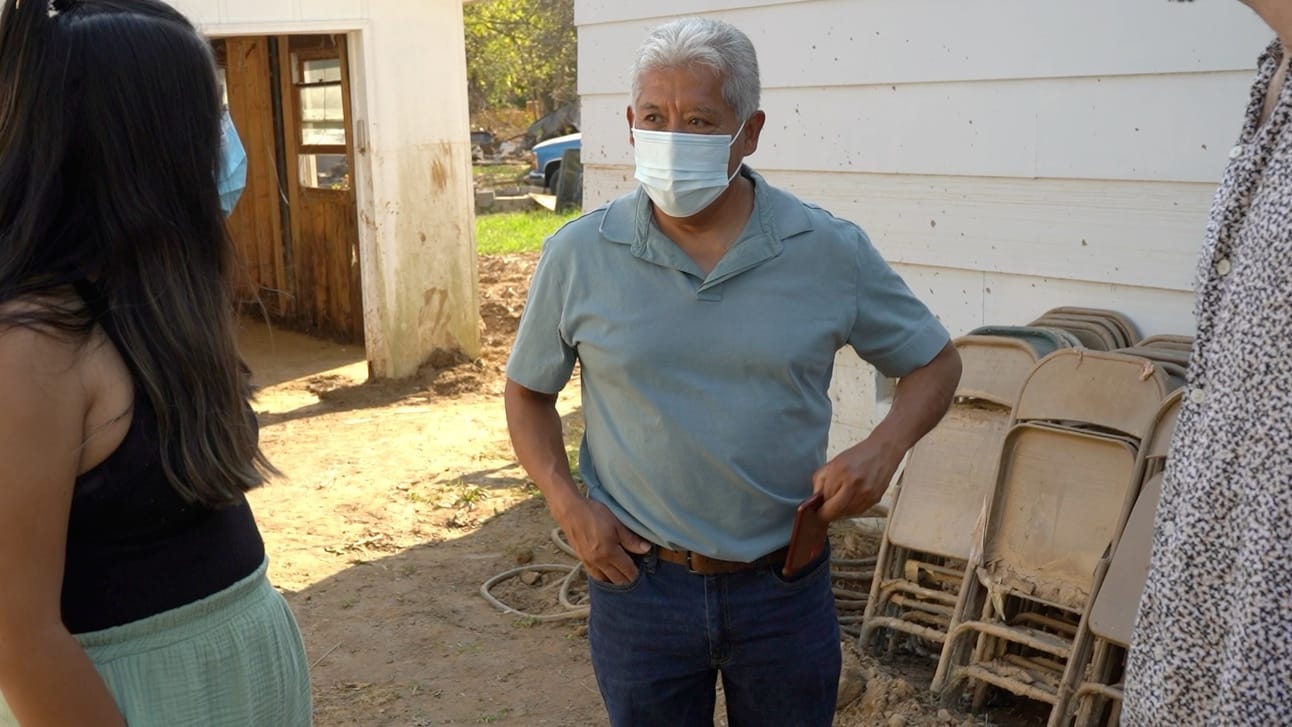
Many of the areas hardest hit by Helene were in the mountain towns that surround Asheville. In Swannanoa, six miles east of downtown, homes were swept down mountainsides; toxic chemicals were released into the water, ground, and air; and everything along the river was ripped away.
The Alday family’s home was a stone’s throw from the river. While the structure survived, everything within it was destroyed. When we arrived, everything the family had ever acquired was sitting out in the front yard, waiting to be brought to a dump.
A sign sticking out of the trash read, “God bless America.”
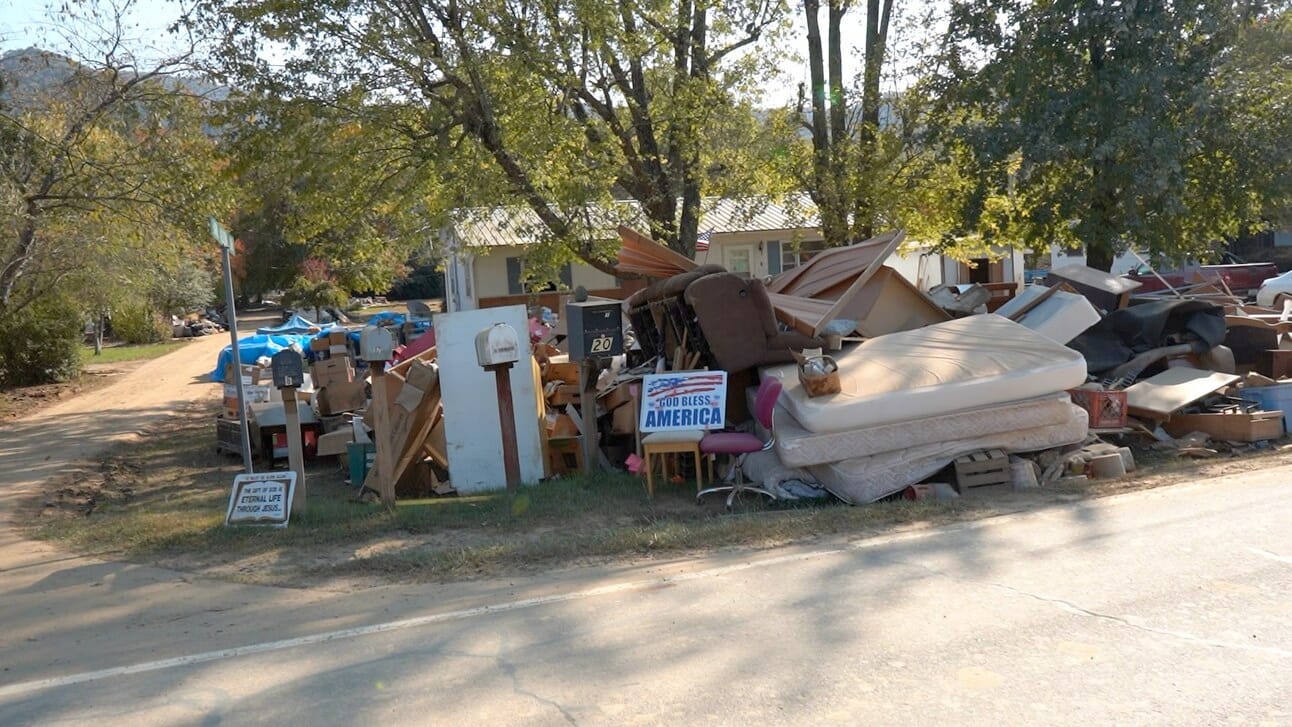
Pablo Alday had legally immigrated from Mexico over 20 years ago and worked in a local supermarket warehouse while earning his citizenship. He and his wife bought a home in Swannanoa and raised a family, including a daughter who became a teacher at a nearby elementary school. Pablo and his wife had truly achieved the American dream. They had been saving for years to enjoy his retirement and were almost there.
The rain started on Thursday night and continued into Friday. The water overflowed the river’s banks and soon engulfed everything between the river and the Aldays’ home. In a matter of hours, the water had reached the roof of their modest one-story house.
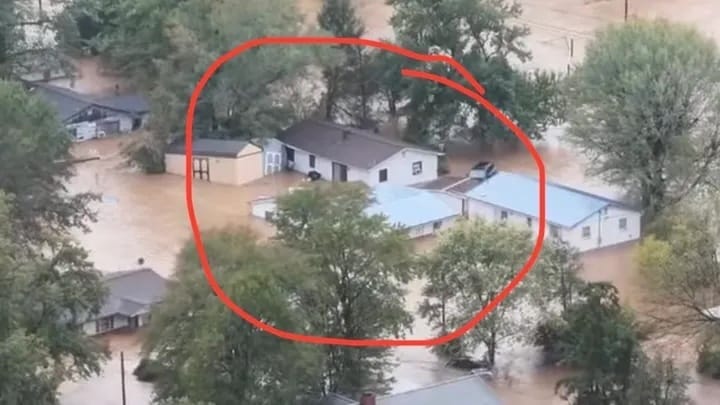
Then hours later, it was over. And in that period, the Aldays lost everything they had.
Two days later, emergency workers entered the home of the Alday family’s next-door neighbor, who hadn’t been seen since the storm. When the Aldays had gone to see if anyone was inside and shouted out a greeting, no one had shouted back.
But someone was inside – their neighbor was trapped in the mud with no water or food unable to shout. He spent over 48 hours there before he was found.
“When my parents found out that he was stuck in the mud, that really…that really hit hard,” Pablo’s daughter said. “They were like: We were here. We couldn’t hear him. We didn’t know there were still people stuck in there.”
The man was brought to the hospital in critical condition, where he remained as of our visit, two-and-a-half weeks after the storm.
We asked Pablo how it felt to have accomplished so much in the United States and then lost it so quickly.
“Sad,” Pablo said. “Very sad.”
In his backyard, he picked through a mound of junk. He pointed to a clump of metal: “My tractor.”
“It’s destroyed?”
“Disappeared,” he said.
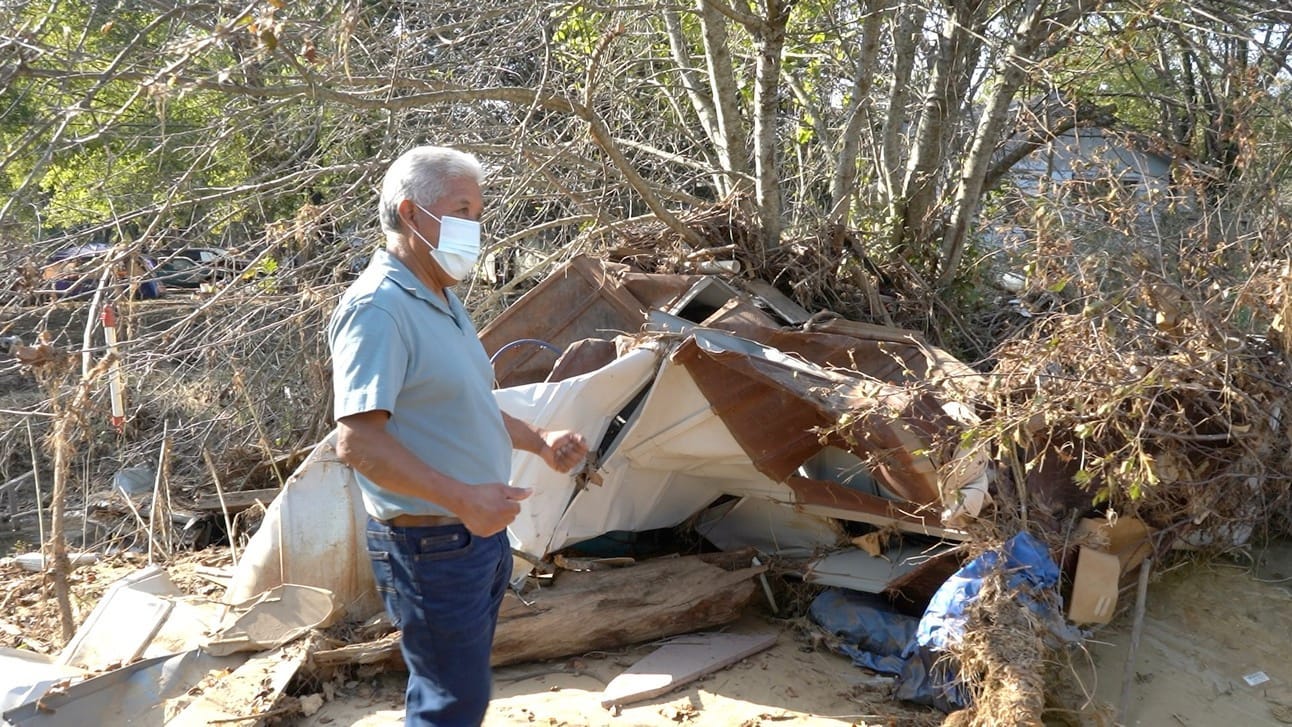
Because Asheville isn’t a flood area, Pablo’s daughter explained, their insurer wouldn’t cover the damage. FEMA had provided an initial $750, but there was no information about what might be covered beyond that. Pablo would therefore have to use the family’s savings to rebuild their home. Those savings, his daughter explained, were about to enable his retirement. Now, retirement isn’t in the picture.
The Alday kids had started a GoFundMe to help. It had raised just $180 of the $10,000 target, but the Roca app community donated $8,000 over the weekend. If anyone wants to contribute, this is the link.
In the mountains north of Asheville are towns, many poor, that were decimated by the storm. In the least accessible towns, people remain totally cut off from society. Many of these towns had a single road in and out and that road was destroyed.
In Barnardsville, much of the riverside was destroyed. In one place, an auto repair shop had been swept away, leaving a pile of mud; in another, a bridge had become a heap of stones, trapping a family on the other side. At one spot, we saw the remnants of a trailer park and went to take a look around.
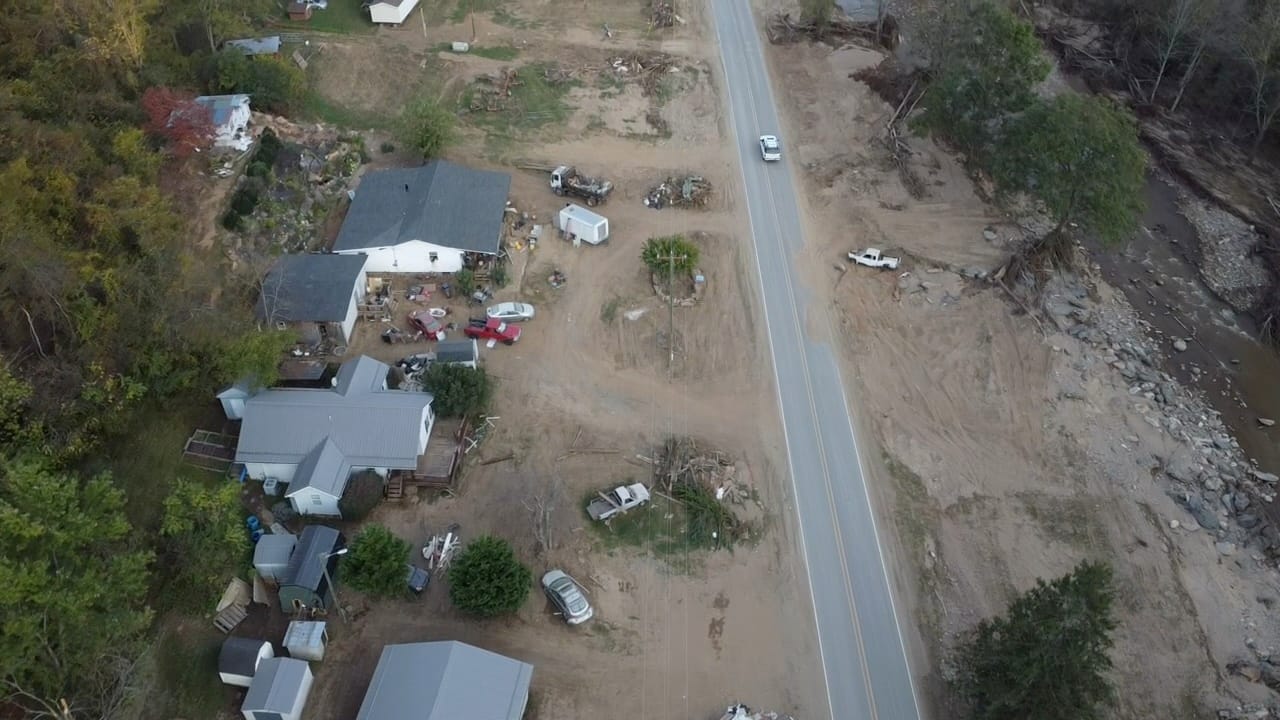
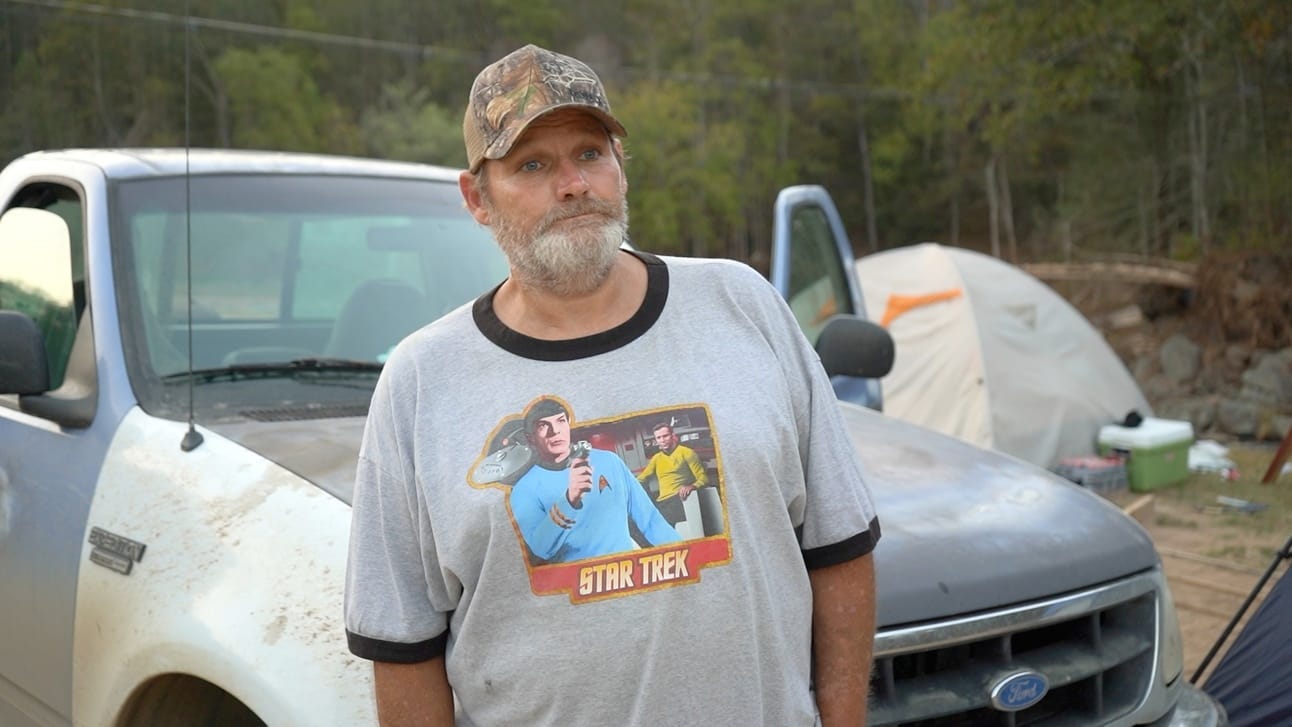
While Asheville boomed in recent years, much of the area around it remained poor. It’s Appalachia, one of the most inaccessible and, arguably, neglected regions in the continental US. Yet the people of such a region aren’t the kind to expect help, which is why as we walked through the condemned trailer park, we spotted a tent on the riverside. A man had just exited it and was building a wooden rack, apparently to hang his clothes.
The man, Timothy, had lived here for 51 years and had been living in his tent since the flood. When I asked where his trailer was, he gestured down the river: “It’s gone, six of em. I ain’t never seen no shit like this.”
On the Thursday of the storm, the fire department had come knocking on people’s doors to let them know a storm was coming. Some people left, but others, including Timothy, stayed. But on Friday morning, the river spilled over its banks. As it got nearer to the trailer, Timothy got scared. When it reached his front step, he got in his car. “We were gone,” he said, in search of higher ground.
When he returned, his home was gone.
In the following days, people tried to loot the wreckage. One local guy was caught looting a four-wheeler.
“They beat him to damn death,” Timothy said. “And one got shot in the stomach over here the other night.”
“They’ll shoot you,” he said. “They ain’t got nothin’ left. You out here trying to steal what little they got left, they’ll kill you. Because they earned it…and they’ll never let nobody take it away. Not like that. But hell, this flood take it away and they won’t say nothin’.”
He gestured at the field we were standing in: “Everything here was underwater,” he said. Before, he said, it had been a “beautiful green yard.” Now, we were standing on top of a four-foot layer of sand.
When we expressed shock at Timothy’s plight, he scoffed.
“This ain’t the worst part, guys. There’s places way worse than this…Hope I don’t live to see another somethin’ like this. It’s bad.”
“Did you have insurance?”
“Nah, we rented. So no big deal. Ain’t my first. I’ve had fires and all kinds of stuff. This my third time bein’ homeless....We’re good. This stuff is just material. Didn’t lose no family. All my family live out here, so we’re grateful for that. Everybody made it. Well, not everybody. All my family made it.”
“It just happens,” he said. “Ain’t nothin’ we can do. It just shows you how small we are. We aren’t in control of it. So how are you supposed to feel? You gotta take the good days with the bad.”
Timothy knew the area like the back of his hand: “It’s 12 miles from here to the top of the mountain. So you got 12 miles, about nine streams. All the timber coming with it. Ain’t nobody can stop it. I don’t think God can stop it.”
“It was a force to reckon with. It does show you how little you are. But what are you gonna do? Seriously. What are you gonna do? You can’t cry all the time. I broke down 30-45 minutes here and there, but you gotta go on. If you break completely down, what’s the use of even being alive? Man’s gotta fight for something. All the time fighting for something. I don’t care if you’re a good Christian or not, a good person or bad person. You’re fighting for something all the time. Little, big – all the time fighting.”
“Do you think people here are tougher? Appalachian people?” we asked.
“I think everybody is tough, in their own way. You gotta be tough. I’m tougher than city people, but them city people tougher than me when I go to the city. But they ain’t tougher than me when they come out here. People’s tough, everybody’s tough.”
“These people, they’ll bounce back. They’re like rubber balls. It’s pulled this community together. It was growing apart – but this pulled them back in. Too many outsiders, drugs, people giving up on each other. But I’ve never seen some shit like this. People helping people, enemies helping enemies. True enemies helping each other. Seriously…It’s changed everybody’s heart.”