

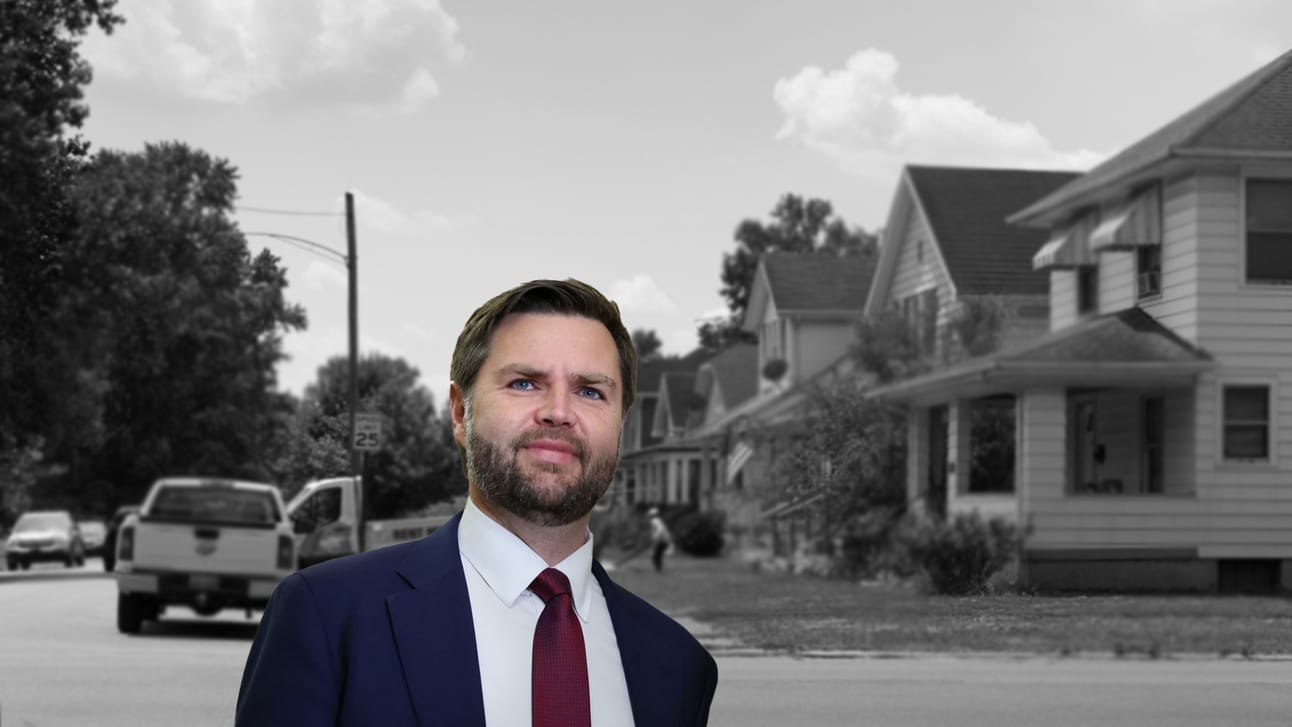
By Max Frost
Tomorrow, America enters its 250th year. As it does, the media will tell you different things: That it is a country of woke lunatics; that it is one of fascists and racists; that it is enabling genocide; that it is preventing it; that it needs to be made great again; that it already is.
Don’t listen to them.

On Tuesday, Roca videographer Drew and I arrived back in New York City from a week-long road trip through southern Ohio, Kentucky, and Indiana. It marked our eighth US trip in the last year – a period during which we visited 12 states, drove ~10,000 miles, and interviewed ~1,000 Americans.
We doubt many journalists have seen more of this country than we have in the past year. We’ve traveled from the glistening high-rises of Chicago’s Loop to the city’s crime-ridden West Side; from the Mexican neighborhoods on the Rio Grande to the ranches of northern New Mexico; and from the self-described hillbillies of Appalachian Georgia to the booming downtown of Atlanta.
And in doing so, we’ve learned this: Anyone who has a simple take on the country hasn’t seen enough of it.
There’s little we’re prouder of at Roca than our commitment to covering this country as it actually is. We think we’ve made huge strides toward that in the last year, which has seen us become the fastest growing news channel on YouTube, gaining over 200,000 subscribers in just 11 months, and made us the only large news outlet to correctly predict last year’s election result. If you read Roca’s on-the-ground reports, you knew Trump was poised to win.
In America’s 250th year, we’re using this newsletter to double down on that mission: We’ll be delivering weekly installments from our travels across the country. If you want to know the state of America in the year ahead, this is the place for you.
We begin that series today, with a dispatch from Vice President JD Vance’s hometown.
“Yeah, we knew JD,” the woman said.
She was sitting on her porch, shaking. I assume she had Parkinson’s. She took a puff of her cigarette and gestured behind her: “My son worked with him at the store over there, what’s now the Dollar General.”
The Dollar General was just one sign of the poverty in this part of Middletown, Ohio.
The buildings downtown were mostly empty, although there was a Boost Mobile store and a few shops. People in the neighborhood adjacent to downtown told us that prostitutes wandered the streets of the area. The women outside the downtown cafe told us that they had moved to the suburbs because downtown had gotten “so bad.”
“Don’t you know this is a top 15 most ghetto town in Ohio?” one man asked.
Vance launched his political career off this hometown: Hillbilly Elegy, his memoir about growing up in a troubled family between Middletown, Ohio and Jackson, Kentucky became a best-seller that fueled his political rise. We wanted to know if the book was accurate and what Vance’s hometown thought of him, so we went to Middletown.
The lady on the porch was a fan: “JD was a good kid,” she said. “I like him.” I asked where he grew up, and she gestured away from us: “On the other side of the tracks.”
The train tracks divide Middletown: East of the tracks is more middle class; west, where I was, is poorer. Vance group up on the east, so we headed there.
We drove down McKinley Street – fittingly named for a president – and past a few sizable but beat-up houses. Eventually, we reached #313 – directly opposite a large park – where we found three teenagers and a large dog sitting on the porch. The dog growled and the kids hushed as I walked up. When I introduced myself and asked to talk to them, two disappeared without a word. The third, whose gender I couldn’t immediately tell, nodded but didn’t make eye contact.
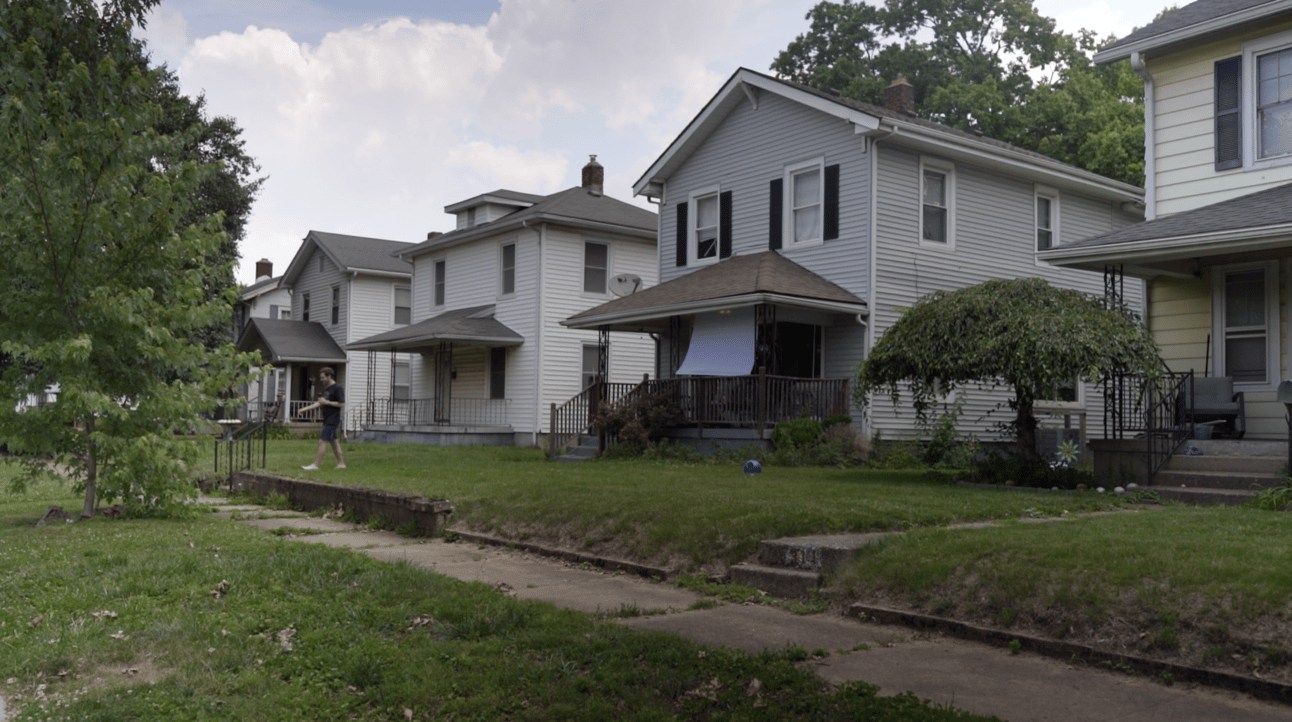
Vance’s home has the white shade on the porch
I asked what they thought of the fact that the vice president had come from the same humble roots.
“Nothing,” they mumbled.
After a few more unsuccessful attempts at conversation (and eye contact), I walked away.
Two houses up, I met an older man who said he knew “JD” and his family well. “Bonnie was a matriarch,” he said, referencing Vance’s grandma and saying she kept Vance in line. “JD didn’t have an easy life. If he makes it, it’s because he earned it.”
Before I left, the man asked if I believed I would live a better life than my parents. He weighed in with his own take: “I think we’re becoming a two-class society. An upper class and people who serve them.” He said he views the world as headed for catastrophe.
“At least Trump will slow it down.”
In that man’s vision of the world, the upper class lived just a two-minute drive from Vance’s childhood home: There, a few streets away in the same neighborhood, were large homes with nicely manicured lawns. A man mowing his told us that he “loved” Middletown – a great place to raise a family and live a good life, he said.
Had Vance been born on this block, I thought, his memoir would have told a very different story.
Back over the tracks – past the Dollar General and the Dollar Tree – locals told us about the toll prostitution and drugs had taken on their neighborhood, the “ghetto” of Middletown. The cops were “worse than the ones in LA, and you’ve heard how bad they are,” one man said. The people we spoke to said the town had gone downhill – that when they were kids, their parents worked in a steel mill and paper mills. Now, the only jobs were in fast food and a hospital, all on the edge of town, or in Cincinnati, 30 miles away.
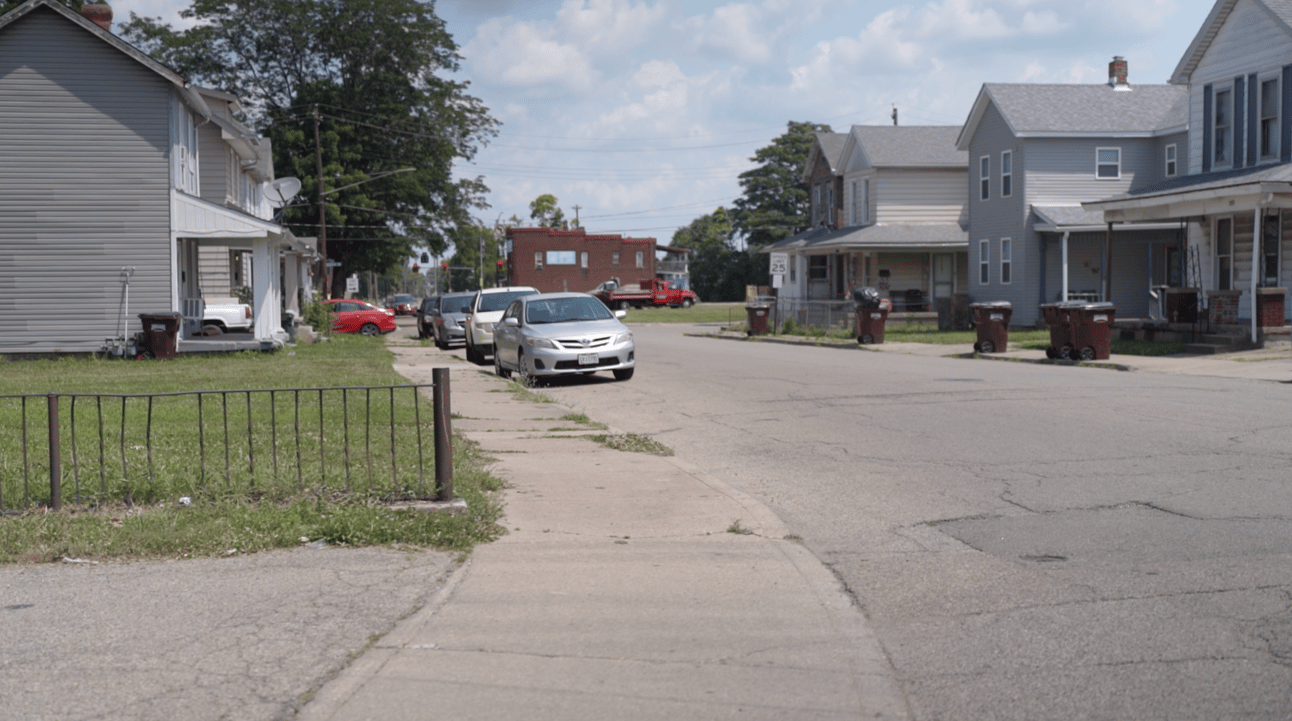
A street in the rougher part of Middletown
Once again, Vance’s pro-tariff, conservative perspective made sense: He grew up in a former steel town where families had broken up and drugs had wreaked havoc.
But before leaving, we stopped in the neighborhood’s corner store. Inside, a South Asian man was stocking shelves. Six months ago, he had moved from a town in the Nepali Himalayas to Middletown.
“I’m not making much money yet,” he said. “But I hope to grow this business.”
He was glad to be in America.