

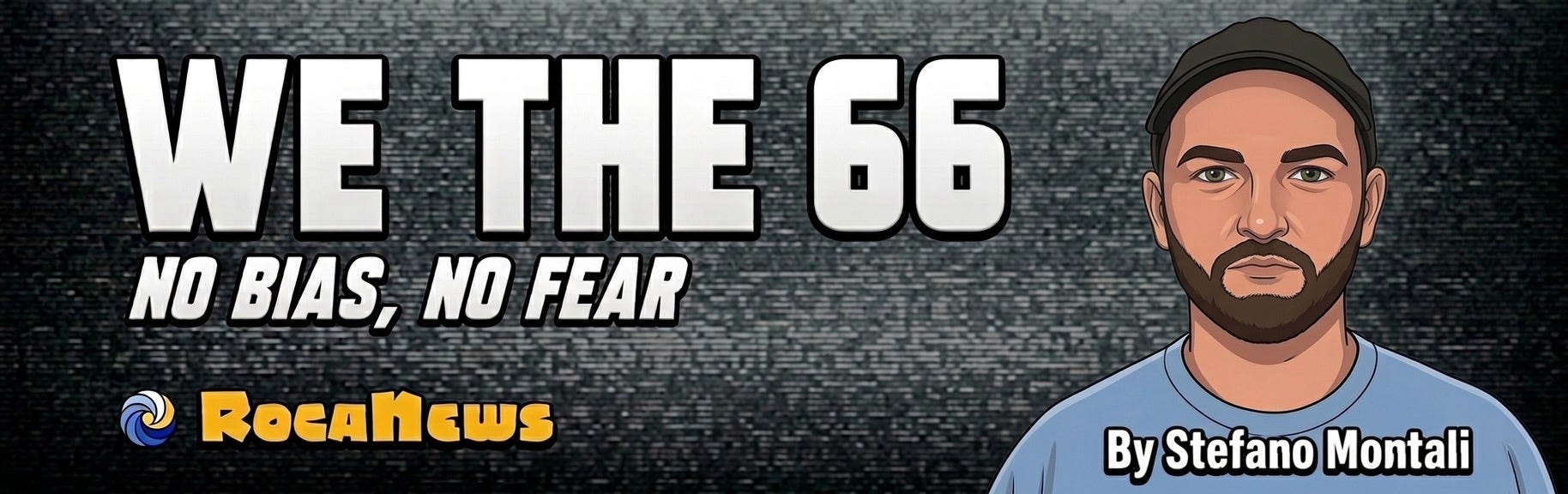
Hi Roca readers. I’m Stefano and I’m new here.
That’s probably obvious because, for starters, my name isn’t Max.
Last week, I joined Roca as a senior correspondent and soon you’ll start seeing me on this Substack and on our YouTube. I’m excited to be here.
I want to tell you a story from a college summer I lived in the Appalachian part of Kentucky, but first, let me introduce myself.
I grew up in south Florida, went to college in South Carolina (with a stint in Shanghai), and then lived and worked in San Francisco, Chicago, and Berlin.
For the last ~3 years, I was in Brooklyn, reporting at The New York Times, where I wrote about everything from a rockstar-turned-physicist, an AI company takeover of the New York subway, and the most supportive subreddit on the internet, r/Bald.
Oh, and the Dallas Cowboys Cheerleaders. That was fun.
For most of these stories, I’d interview people on calls or over Zoom from a phone booth at our office. But sometimes I’d get sent to report on the ground, from places like a greyhound racing track in West Virginia, a seaside village in Iceland, or a Buddhist monastery in San Diego.
Those stories were hands down my favorite. Why? Because spending time with everyday people is when I learn most. That’s what initially drew me to Roca’s reporting: Watching the YouTube videos felt like teleporting around the country (and world) and peeking into conversations with people I’d otherwise never meet. I’m guessing it’s the same for many of you, too.
Okay, so now to my summer in Appalachia.

After my sophomore year, I landed a summer job with a home repair organization in Salyersville, Kentucky, an isolated town of 1,500 people about a two-hour drive east of Lexington. It has a history of timber and farming, plenty of churches, and frequent floods.
In 2014, when I was there, the median income was around $16,000, way below $53,000, the national median household income that year. Salyersville’s only claim to fame (if you can even call it that) is that it’s the hometown of the guys who founded Hustler Magazine.
Other than that, you’d never hear of it.
Anyway, that summer I lived with three colleagues in a science classroom at the local high school atop a small hill. Together we managed pro-bono repair projects for local families’ homes, usually single or double-wide trailers.
Each Sunday, the four of us stood outside the school’s main building and welcomed new busloads of volunteer groups made up of high schoolers and chaperones from states like Wisconsin, New Jersey, and Minnesota.
We’d assign them a home and they’d jump in wherever the group from the week before left off: Replacing rotting foundations, building access porches, digging drainage ditches and putting up retaining walls. Some repair projects took a few weeks, several the entire summer.
Part of my job was to visit the homes we were working on (checking on progress, crew morale, etc), so most days I’d jump in either our pickup truck or white van and head for the hollers. Through that I got to know the families that lived there.
Many households were multigenerational, with grandparents, their kids, and their kids’ kids living in the same home. It was the kind of town where a last name tells a family history in an instant. The high school son of one family took a liking to our group and hung out with us for most of the summer. He called me Bub, and still does on Facebook.
People were often grateful, even in the face of crushing poverty and lack of opportunity (and remember, when I was there, fentanyl hadn’t yet hit Appalachia hard).
I wasn’t very politically informed back then, which I think was a good thing. Because when I heard their stories and witnessed their struggles, I didn’t immediately assign them as symptoms of decisions by Democrats or Republicans, progressives or conservatives. What I saw was a tight-knit community in a tough spot, with not very many options to get out of it.
Two years later, I was in an office building at my first job in Chicago on the morning after Donald Trump was elected for the first time. Many of my coworkers were shocked, but not me. That summer in Appalachia, I’d experienced a forgotten part of America that most knew nothing about. The people needed a change. The status quo had to go. The voting showed that.
That’s the value of going to a place and spending time with everyday people. Roca gets that not everyone can travel around the country. But everyone can watch a video that does so with you. I’m excited to be part of that team. Thanks for reading and see you soon.
Oh, and please, if you have an idea for a story, shoot me an email: stefano@rocanews.com.
I’m all ears.
Stefano
Editor’s Note:
So for all of you who tell us that we criticize the NYT relentlessly and narrow-mindedly, just know that our *first* senior correspondent hire comes from the NYT (the criticisms against which we still maintain). And for those of you who hear the initials “NYT” and shiver, just know that every piece of Stefano’s that we’ve read is one we would’ve published under our masthead. It was clear from his initial outreach email that he’s fully aligned with what we do.
And Max T is thrilled to welcome another Florida Man to the team.
As always, you can find our latest reporting here:
We’ll see you all again tomorrow.
—Max and Max
You have explained to Stefano that he will need to change his name to Max or at least Mac to be fully accepted into the tribe, right? As someone who formerly lived in Florida and currently resides in Western North Carolina, I offer my sincere welcome and am looking forward to reading your pieces.
Welcome Stefano. Not sure why we need to provide our age and gender here, but I will pass on that. ;-) Looking forward to reading your writing!