

🌊 RIP, Supplement Industry?
How RFK Jr.’s GRAS policy threatens the multi-billion dollar supplement industry
By Rob McGreevy
In 1958, Congress enacted a subtle piece of legislation with major implications: The Food Additives Amendment.
Within this policy was the GRAS, or “generally recognized as safe” program, which let food and nutrition companies self-certify the safety of their own products without submitting their data to the FDA. Originally intended as a safety valve to prevent the FDA from being overburdened by redundant certifications for slight variations of common ingredients, GRAS has emerged as a lightning rod. Proponents say it enables innovation and helps the food industry; critics say it has mutated into a loophole for corporations to make an end-run around consumer protections.
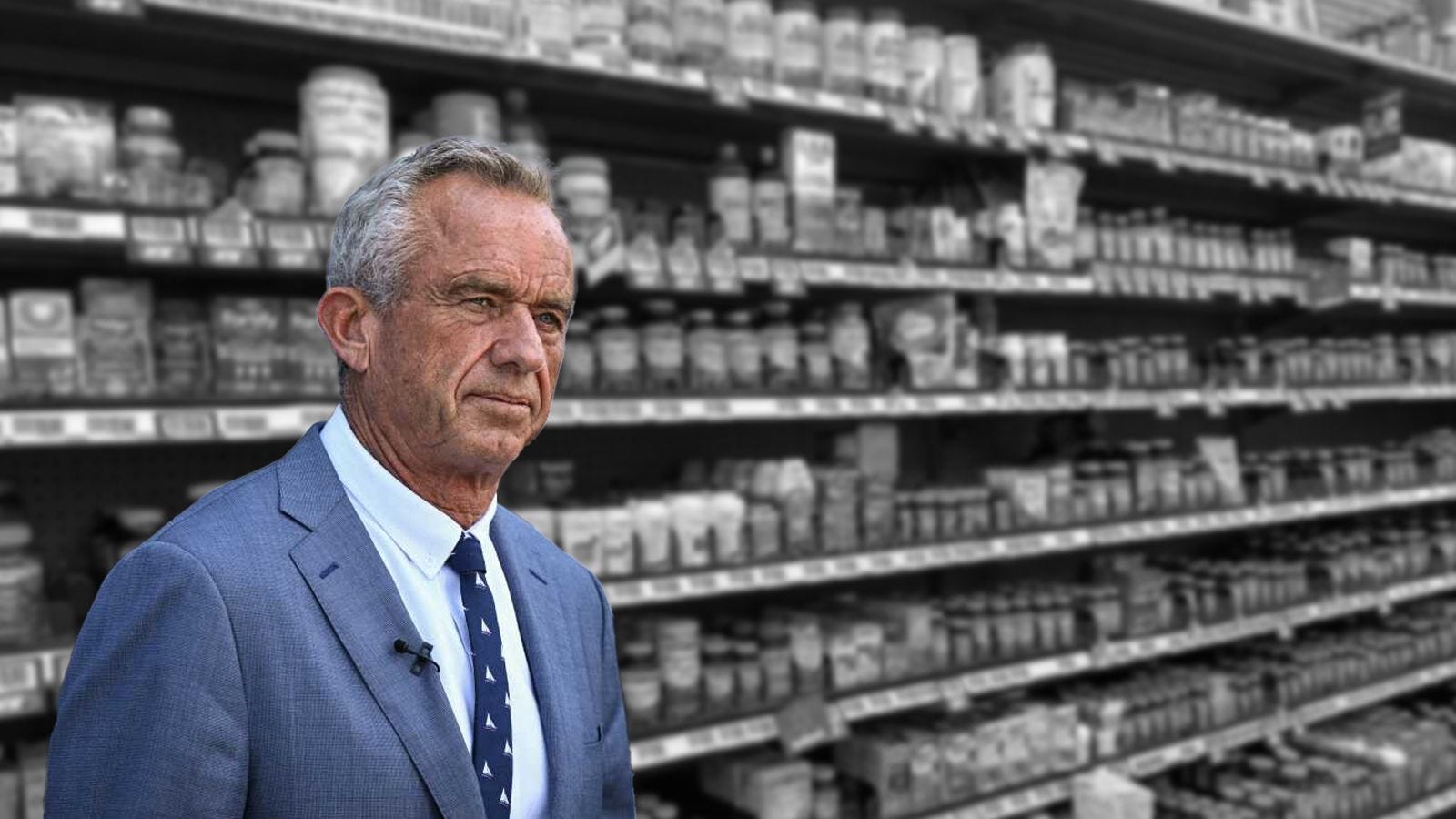
Health and Human Services (HHS) Secretary Robert F. Kennedy (RFK) Jr. belongs to the latter camp: “For far too long, ingredient manufacturers and sponsors have exploited a loophole that has allowed new ingredients and chemicals, often with unknown safety data, to be introduced into the US food supply without notification to the FDA or the public,” he tweeted in March.
RFK Jr. proceeded to order the FDA commissioner to explore modifying GRAS, including by eliminating “the self-affirmed GRAS pathway.” HHS said RFK Jr.’s goal is to “enhance the FDA’s oversight of ingredients considered to be GRAS and bring transparency to American consumers.” In essence, he wants the government to have greater control over which ingredients are safe and healthy, potentially affecting everything from herbs and extracts to fillers and preservatives.
For the supplement industry, the implications are massive.
Simply put, supplements are a dietary device meant to augment, add to, or complement nutrients like vitamins and minerals or dietary enzymes that one should be getting from a balanced whole foods diet. But are supplements safe? How are they actually regulated? And will the Make America Healthy Again (MAHA) reform only take unsafe chemicals out of food products, or will it destroy a booming $200B industry? That’s the subject of today’s deep-dive.

Earlier this month, Duffy MacKay, a dietary scientist and senior vice president of a supplement lobbying firm, warned The New York Times that Secretary Kennedy risked destabilizing an industry that sells everything from creatine to Vitamin D and iron.
“[RFK Jr.] may not have fully appreciated how it could end up limiting consumer choice in supplements, something that runs counter to their broader platform,” he said.
The Times report noted that at least four different lobbying groups have been constantly in and out of DC since RFK Jr.’s March announcement, looking to spare their clients’ profits from the fallout of his chemical crusade.
At risk for the industry is nothing less than an absolute gold mine.
With modern medicine experiencing a freefall in public trust since the pandemic, everyone from carnivore influencers and holistic healers to crunchy hippies and vegan MAHA moms has filled the vacuum.
A good portion of these health gurus exist on Instagram and come armed with an arsenal of products. Follow your favorite carnivore diet advocate, grounding guru, or meditative medic’s advice, and you can be sure to find a five-star rated tub of colostrum or bags of mushroom tea in the link-in-bio at the end of their rainbow.
The combination of declining confidence in typical medicine and the ever-present capitalist spirit in the American citizen has transformed what was once a cottage industry into a powerhouse: In 2020, the global dietary supplement market – a range of products that runs the gamut between vitamins and minerals like magnesium and vitamin D to more niche botanical herbs such as ashwagandha or castor oil – was was worth $82B; in 2021, it jumped to nearly $150B. Rapid growth has continued since, reaching $180B in 2023 and $192B in 2024. Pre-pandemic projections wildly undershot reality, with one 2020 estimate from PricewaterhouseCoopers (PwC) falling $43.5B short of the actual market size. Current estimates peg the industry at $400B by 2033.
These are global figures, but Americans in particular are exceptional consumers of pills and potions: While 26% of the global population on average takes at least one supplement like vitamin C or zinc, that number for Americans is 38%.
Walmart and other brick-and-mortar retailers still dominate supplement sales today; however, they’re steadily losing market share to the influencer class – some of whose members now find themselves in positions of great influence.
RFK Jr.’s closest allies include Dr. Mark Hyman, a staunch Kennedy supporter who wrote the foreword to one of RFK Jr.’s books and offers a range of 502 supplement products on his website. Calley Means – a special employee of Kennedy’s HHS, one of his most vocal supporters, and a social media favorite – owns TrueMed, a company trying to empower Americans to use pretax insurance dollars on supplements and other health interventions.
Yet those ties haven’t impeded RFK Jr. from targeting an industry that he and others say allows companies to sell unhelpful, or even dangerous or illegal products.
Doctors and nutritionists recommend people try to get the bulk of their vitamins and minerals from food and not supplements, hence the title supplement. But studies are showing that the global population is increasingly devoid of those key nutrients.
The World Health Organization (WHO) estimates that 2B+ people are deficient in at least one key micronutrient, and supplementation in some of these key micronutrients – such as vitamin C, B12, D3, and iron – is therefore not only recommended, but in some parts of the world, vital.
But parsing the wheat from the chaff can be a challenge, and it often seems like one needs a degree in chemistry to figure out which supplements are actually healthy: Methylfolate, ubiquinone, glycine, creatine, collagen, taurine, astaxanthin – these are all real supplements recommended by board-certified cardiologists and respected neurobiologists like Andrew Huberman, yet they haven’t necessarily been subject to a full regulatory process.
The murkiness in the supplemental waters makes the industry ripe for fraud. PwC listed an increase in counterfeit and fraudulent supplements as a key barrier for industry growth in their 2020 analysis, and the US Justice Department (DoJ) has prosecuted numerous supplement companies for misleading customers in the past six years. In 2019, the DoJ indicted six individuals and two companies – Blackstone Labs and Ventech Labs – for selling unapproved products, including steroids, under the auspices that they were FDA-approved supplements. In 2024, Austin, Texas-based 5 Star Nutrition forfeited $4.5M in sales after the DoJ indicted them for falsely misrepresenting products such as “Alpha Shredded” as dietary supplements.
“The products contained ingredients mislabeled as dietary ingredients or not listed on the product label,” the indictment read.
Pro-supplement lobbyists argue that potential legislation or executive action aimed at curbing self-regulatory powers will remove consumer choice. Yet critics – and even many industry experts – paint the supplement game as the food world’s wild west.
“When it comes to quality of the product, there’s not really any regulation at all. Which is terrifying,” John Ray, a Washington State-based certified personal trainer and nutrition coach, told Roca. Though Ray promotes a small selection of supplements on his own website (he’s big on creatine), he believes a good diet, sunshine, and exercise will get you 99% of what you need.
Supplements provide benefits to millions of people, but others have unproven benefits. Are supplement consumers getting the ingredients, benefits, quality, and country of origin that are being advertised? It’s those questions that are yet to be solved, and that RFK Jr. hopes to answer by changing the GRAS program.