

🌊 The Four Things Destroying Young Adults’ Minds
A new report across 85 countries finds that the mental health of young adults has taken a nosedive since 2019 and explains why

It’s time we take memes a little more seriously.
Last week, the below post went mega-viral on Instagram, garnering over 650,000 likes in five days. For those unfamiliar with Instagram, that’s a lot of likes for anyone not named Taylor Swift or Kylie Jenner.
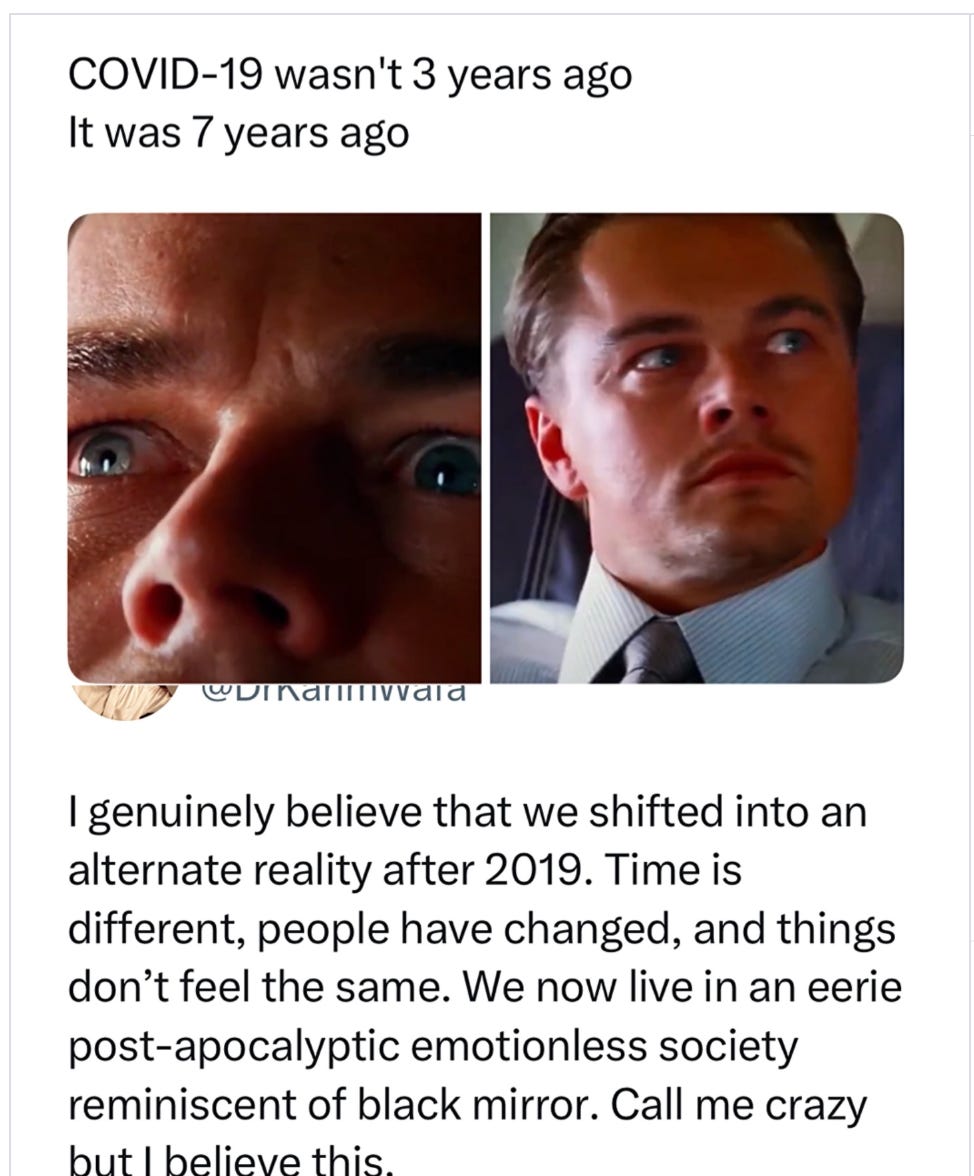
The post epitomizes a new meme genre that compares life before the pandemic to life today. Keep scrolling, and you’ll see examples of memes in this doomerist genre. They typically feature pictures of the same person with a caption like “me in 2019 vs me today.” There are countless templates, including those below that show before-and-afters of Robert Pattinson, The Walking Dead character Rick Grimes, and the Squid Game lead Seong Gi-hun.


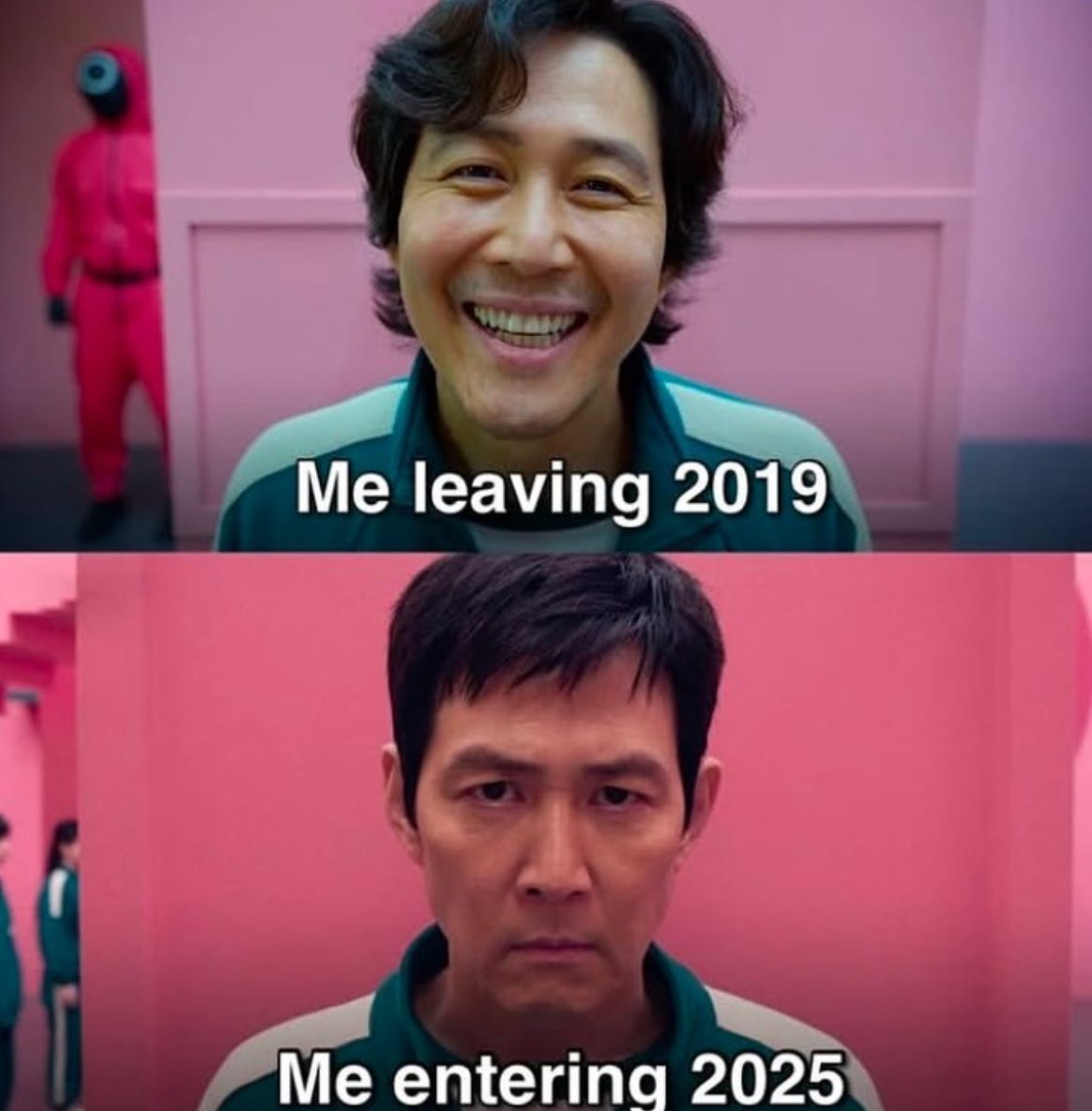
You get the point.
Some of you, we imagine, might dismiss this meme genre as the expected doomerism of today’s young people – a cohort that’s entitled and deluded into thinking that times are tough when they’re not. Others might take an even broader view and say the genre is typical of young people in general; if social media had existed a hundred years ago, we’d have seen the same.
But new data suggest that something much deeper is happening. Reality – or at least the perception of reality – did unravel for young people starting in 2020, and a massive new report explores why.

This report, titled “Global Mind Health in 2025,” reveals a five-alarm fire for the mental well-being of young adults worldwide.
The decline, according to data, accelerated during the pandemic. The report notes:
Young adults under 35... took a sharp nosedive during the pandemic from which they have never recovered. Today almost half suffer mental health challenges of clinical significance that substantially impact their ability to function productively in daily life. This is over four-fold higher than their parents and grandparents.
Importantly, this wasn’t exclusive to the US. As NYU psychologist Jonathan Haidt observed of the report on X:
Young adults used to generally have good mental health, compared to older generations. But now, in ALL countries examined, they are doing badly compared to older generations in that country.
For the report, Sapien Labs, a nonprofit focused on researching the impacts of technology on mental health, surveyed over a million people across 85+ countries, making it the largest and most comprehensive of its kind. While its general findings may not shock you – the decline in mental health for young adults is, indeed, well-documented – the scale and specifics of this report might.
Almost half of young adults suffer from mental health challenges? The average Finnish kid gets a smartphone at 9? There’s an inverse correlation between mental health spending and mental well-being?
Indeed, one of the report’s takeaways was this:
The surprising aspect of this decline in younger generations is that it is most pronounced in the wealthier and more developed countries, where increased spending on mental health care has not moved the needle.
So why is it not moving the needle? What factors are driving this crisis?
We read this report and studied similar ones to find out why.
The first thing to know about the report is that it took a much broader view of mental well-being than just depression, anxiety, or other mental health conditions.