

🌊 The Middle East’s Next War?
The region is already moving past Iran, and new conflicts are arising
By Max Frost
Central Israel
Driving through the hills of central Israel, the sun setting in the distance, the Israeli geopolitical analyst Michael Bauer explains how this region of the world is changing.
“When you’re looking at the Middle East today, you’re looking at several axes of power,” he tells me.
“One Shiite Iranian axis of power, which includes Hezbollah, Houthis, and so on. Another one is a Sunni-Muslim Brotherhood Axis of power, which includes Qatar, Hamas, and Turkey. And the third, what I would call a moderate Sunni axis of power, is Saudi Arabia, the Emirates, the Egyptian government, Jordan.”
That first axis of power – the Shiite one – is wounded, and the region is reorienting for what comes next.

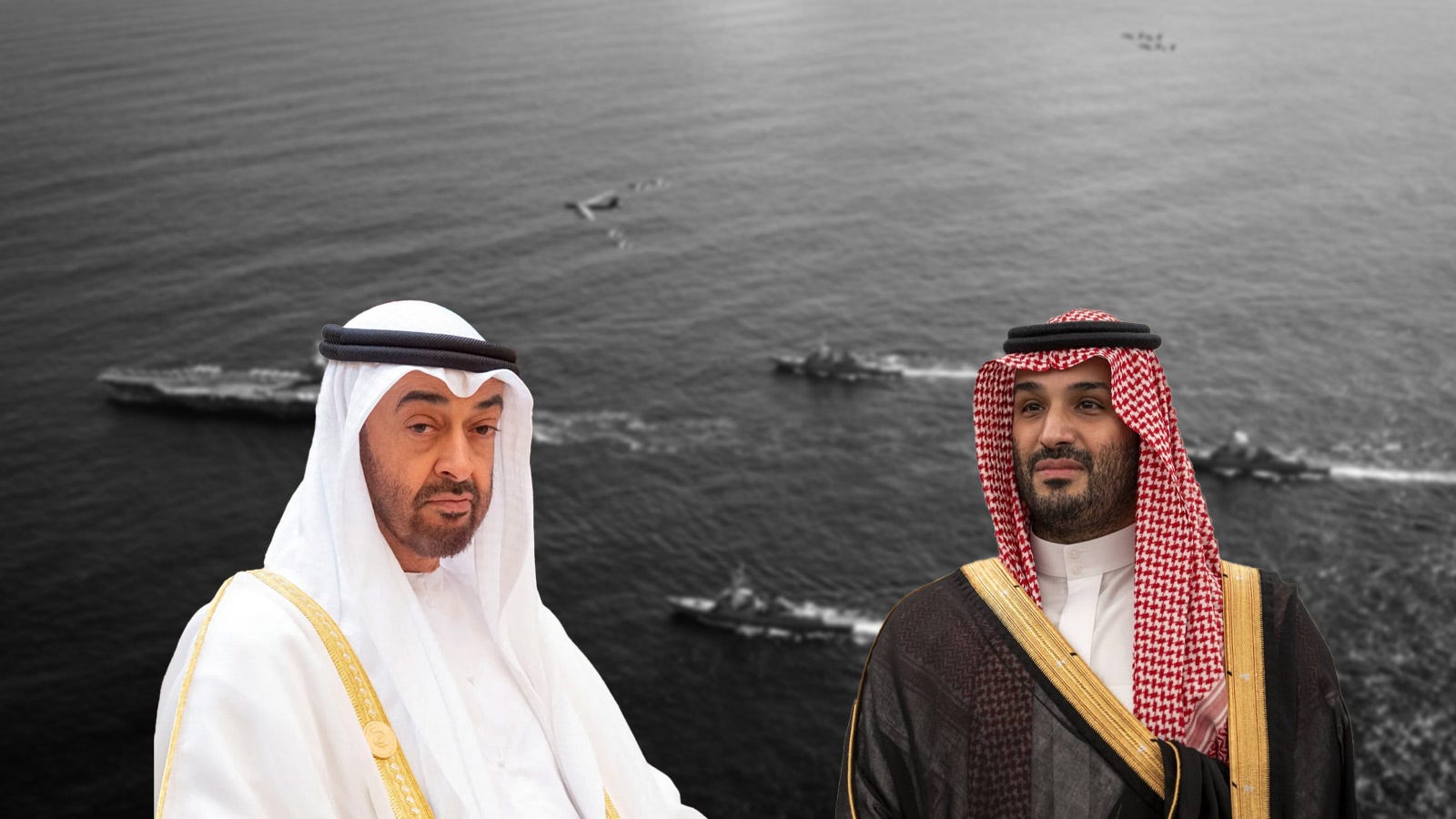
Right now, the US has more firepower amassed in the Middle East than at any point since 2003. The question, of course, is whether President Trump will attempt to use that to topple Iran’s government. The region’s countries are not waiting for that to act, though.
Since the Iranian Revolution in 1979, Middle Eastern politics have been, in part, divided between Sunni and Shia – Muslim sects that splintered in 632 AD over disagreements about who should succeed Muhammad as leader (caliph) of the Muslim people. The majority (Sunni) wanted the caliph to be a member of the community; the minority (Shia) wanted Muhammad’s cousin, Ali. Ali was assassinated in 661 AD, sowing the seeds for centuries of discord.
But until 1979, there was no powerful Shia country: The only large majority-Shia nation, Iran, was ruled by a secular, West-oriented king, the Shah. The revolution changed that, with Shia leader Ayatollah Khomeini establishing a theocratic government in Iran and vowing to export his revolution across the Middle East.
This religious divide has characterized an important element of Middle Eastern geopolitics ever since: On one side were Sunni countries, including Saudi Arabia, Egypt, the United Arab Emirates, and Turkey; on the other were Iran and Shia groups throughout the region, including in Lebanon (organized into Hezbollah), Yemen (the Houthis), and Iraq (a range of militias). There were other divides – over Israel, over the US and USSR, over religious versus nationalist ideologies – but the Sunni-Shia divide drew a line through the region at large.
Today, this is changing.