

🌊 The Rules that Let Patrick Heringer Die
“Criminal justice reform” didn’t protect Patrick from a known violent offender
By Max Frost
Yesterday, we featured the tragic story of Patrick Heringer, who was murdered in his own Cincinnati home, allegedly by a man who spent 19 of the last 20 years in prison.
Since that fateful day, Patrick’s widow Sarah has been fighting to ensure no other Cincinnatian suffers the same fate. In doing so, she has uncovered one glitch in the system after another.
Take this one: If a released felon checks in with their parole officer, they are given candy bars, snacks, and even Cincinnati Reds tickets.
Or this: Felons out on parole complete their own risk assessments. If they know the right answers, they can fill out the survey, be awarded “level 1” risk, and never be checked in on.
Today, we look at the peculiarities of an American city’s criminal justice system, how Patrick’s alleged murderer took advantage of them, and how Sarah is trying to pick up the pieces.

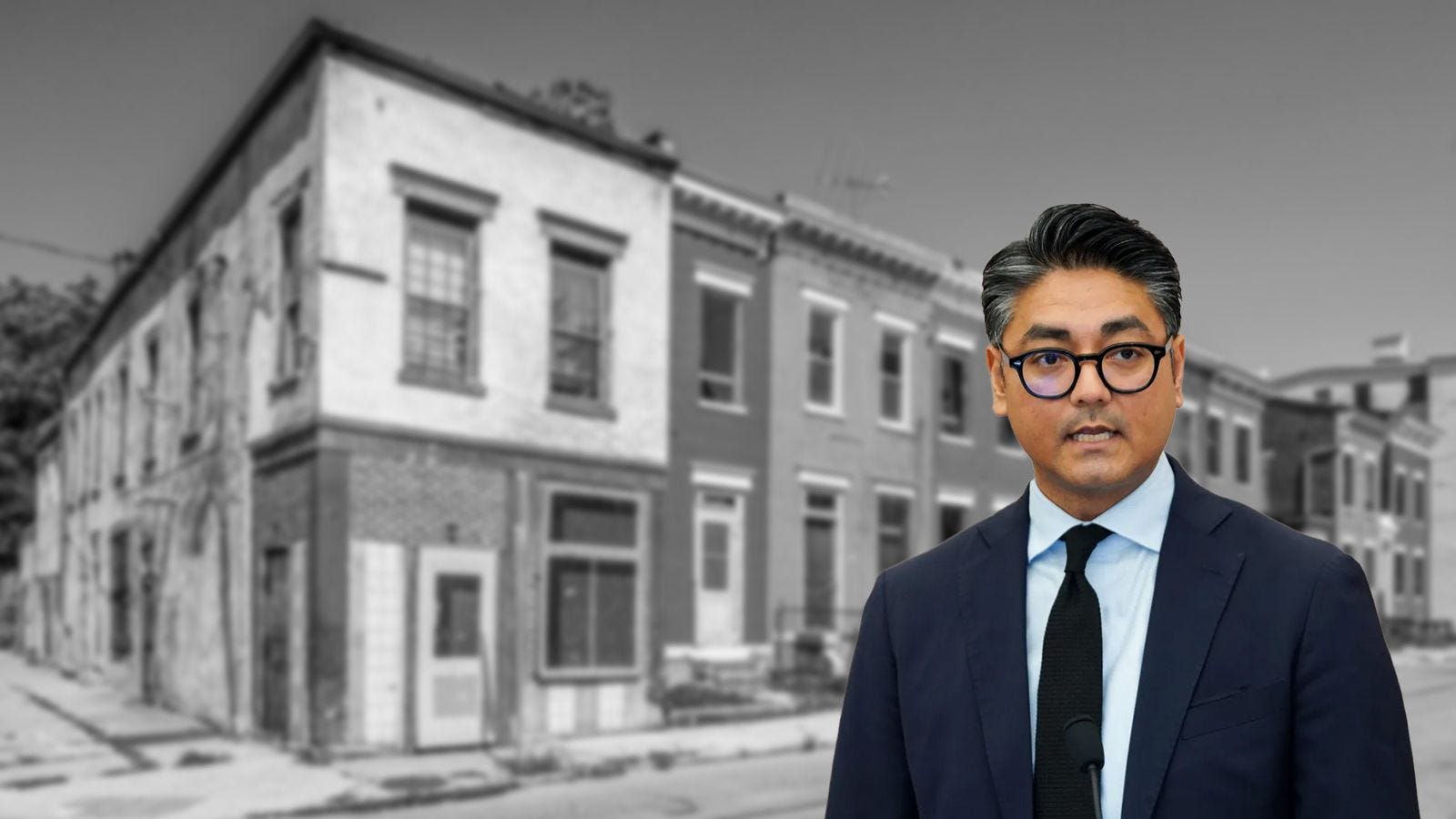
In the wake of Patrick’s murder, Cincinnati Mayor Aftab Pureval (D) said that “public safety is and will always be our first, second, and third priority…We will never stop working to ensure every neighborhood, and every family, can feel safe and at peace.”
But Sarah wants answers: “You keep saying that [public safety] is 80% of the budget; that it’s your number one priority. But there’s zero transparency around how that money is spent, what you’re doing, and what your metrics are for success.”
A prime example, Sarah says, is the ACT Initiative – what the city calls “a holistic approach to gun violence.”
“Achieving Change Together for Cincinnati (ACT for Cincy) builds on a public health approach to violence prevention, focusing on addressing root causes of violence through proactive and collaborative strategies. ACT for Cincy seeks to make neighborhoods safe and vibrant through community well-being, reducing access to firearms, and targeted policing innovations,” the city’s website says.
But, Sarah says, “There is zero transparency on where any money is being spent; zero metrics for success. If you’re spending money on this, what is your metric of success?… Police say these programs are consistently just renamed…if it doesn’t work, just keep renaming it and throwing money at it.”
In practice, the ACT Initiative has seen money spent on dance classes and sandwiches for violent communities.
“Why don’t you turn that into a $20,000 signing bonus for a cop?” Sarah asked. Community activities may or may not help; the city doesn’t control it. “What the city has direct control over is hiring police.”
Just this month, Cincinnati officials moved to close four probation substations and slash the number of parole officers from 12 to six. Fewer parole officers means fewer people caught violating parole. In Ohio, many violent felons are released on either parole or post-criminal release (PRC), which requires the releasee to take certain steps to show that they are reintegrating into society. Mordecia Black, off his ankle monitor, went AWOL on parole, and no effort was made to find him.
Right now, Sarah says that there are 153 AWOL criminals from either parole or PRC, 52 of whom are violent. The police either don’t know where they are, aren’t aware they are AWOL, or are not looking for them.
In Black’s case, Sarah says the police could have easily found him if they chose to look: “He’s not hiding, he doesn’t have an underground network.” He was spotted repeatedly and was actively posting on TikTok.
Without the manpower to track down those on parole, the city is luring them with treats.
Under a new policy, the city will give candy or snacks (mini, personal, and full size!), $5 or $10 gift cards, tickets to Reds games, and even a “Client can skip next phone-check-in” or “Client can skip next drug screen” pass to those who do not re-offend and stay in good status with their probation officers.
Patrick’s murder in June reminded me of the recent murder of Iryna Zarutska in Charlotte. I asked Sarah what she thought about politicians saying such events shouldn’t be politicized, which many Democrats – including former North Carolina Governor Roy Cooper (D) – have said.
“I understand why they say that. I have wanted to stay away from that as much as possible. Because it is so divisive…most of the people I see, most of the clients I work with, most of my neighbors – they’re going to be liberal,” she said. “And yes, the judges right now that are letting criminals out, they have a ‘D’ next to their name. The cities that are going down are Democratic run cities. But the thing is, none of the Democrats I know want any of this. I think politicizing it is a great way to make it ‘us versus them’ and to point fingers.”
“That’s a really great way to stop forward momentum – to start yelling at the other side. When I think a lot of the time, people want the same thing – they want to be able to run a business, to make a livelihood, to live and enjoy a safe neighborhood.”
Regardless of the side, Sarah says, “There’s no guarantee that the people in power care about the people… Everyone in the Senate knows that ankle monitors don’t monitor in real time, and they don’t do anything about it.”
That being said, “There are certain political beliefs or ideologies that we’re seeing play out in game theory, in real time, and it’s not having a sound effect for the people who it should be considering and protecting.”
As for the mayor, who frequently touts his public safety credentials, she notes that he walks around with security: “The mayor obviously knows it’s not safe. He goes around with a uniformed policeman wherever he goes.”
“What do you mean it’s safe down here if you are hiring a police officer to be your personal escort?”
Sarah isn’t sure yet what she will do next.
“When your life is blown up, and you lose everything – the truth is, I feel like I am just floating and hovering. And I don’t even know what’s next. We’re working through the process of grief. And we live in a grief-illiterate country, and capitalism wants you to return to it right away and keep at it and keep at the grind.”
Sarah has been told, “‘Don’t make major decisions within a year.’” She says she’s “working on building a level of resiliency and a capacity to carry something I never asked to carry, I never asked to hold but this is what life gave me.”
Yet she knows one thing for certain: That she’ll do what she can to prevent Patrick’s fate from befalling anyone else. And in that, she empathized with Erika Kirk, Charlie’s widow.
“Even down to the assassination, when Erika Kirk came out, and she gave a really powerful speech – I understand when something like this happens. You do tend to come out swinging, with a survival instinct to fight through it, and that’s what I’ve been doing. And I’m hoping that through the process, I can re-enter into society and do something of good, and not become bitter, or resentful, or callous, or broken. Especially because Patrick did save my life that night. I wouldn’t be here if it weren’t for him, and I want to honor that life that he gave me.”