



By Stefano Montali
For years, I wanted to write a novel. And for years, I couldn’t figure out what about.
Then, my parents, brother, dog, and I drove from South Florida to California a few Christmases ago. We ate tacos in Austin, visited the UFO town of Roswell, NM, and took in panoramic views of the Petrified Forest National Park. We drove along Route 66 for a bit, too.
Around that time, it hit me. The novel should be about a road trip because what else whets a reader’s (and writer’s) appetite for adventure, discovery, or reinvention more than getting in a car and heading out on the open road?
I had that feeling again a few weeks ago when I returned to Route 66 for the second time. Roca camerawoman Amalia and I had set off from Lawrence, Kansas (to shoot this heartwarming video for RocaSports), toward Tulsa, Oklahoma, and soon realized that the iconic road beneath our tires was celebrating 100 years.
Over the past century, Route 66 has assumed a mythic identity. Through popular culture (films like Easy Rider, Thelma & Louise, National Lampoon’s Vacation and Cars) to literary classics like The Grapes of Wrath – in which John Steinbeck called it “the mother road, the road of flight” – Route 66 became emblematic of the romantic American experience and its expansive possibility.
While in Steinbeck’s time, the route was used by people fleeing the Dust Bowl for the beckoning West Coast, today it’s often seen with rose-colored glasses. Many towns on Route 66 faltered when highways bypassed them, and driving slowly via local streets lost much of its intrigue.
Still, the road trip is perhaps one of Americana’s most nostalgic elements and Route 66 its most obvious setting.
We’re getting a taste of it now. As I write this, tourists from across the globe are crisscrossing the country via the road during the World Cup. They’ve posted from along it about falling in love with the people and traditions of the American heartland: Tiny towns, ranch sauce, diners, free refills, good old-fashioned Southern and Midwestern hospitality. One German fan broke down in tears on live TV after recounting his past few weeks on the road.
That a single country can boast of prairies, red-rock canyons, and majestic beaches within its borders is a foreign concept to many. Not to mention having them all along a road that stretches 2,448 miles from Chicago to Santa Monica.

On Route 66 this second time, Amalia and I stopped in Vinita, Oklahoma’s second-oldest city (fun fact: it once had the world’s largest McDonald’s). All around, there were murals on the sides of buildings, plaques in the cement of the sidewalks, all of them assuring us that this was indeed Route 66.
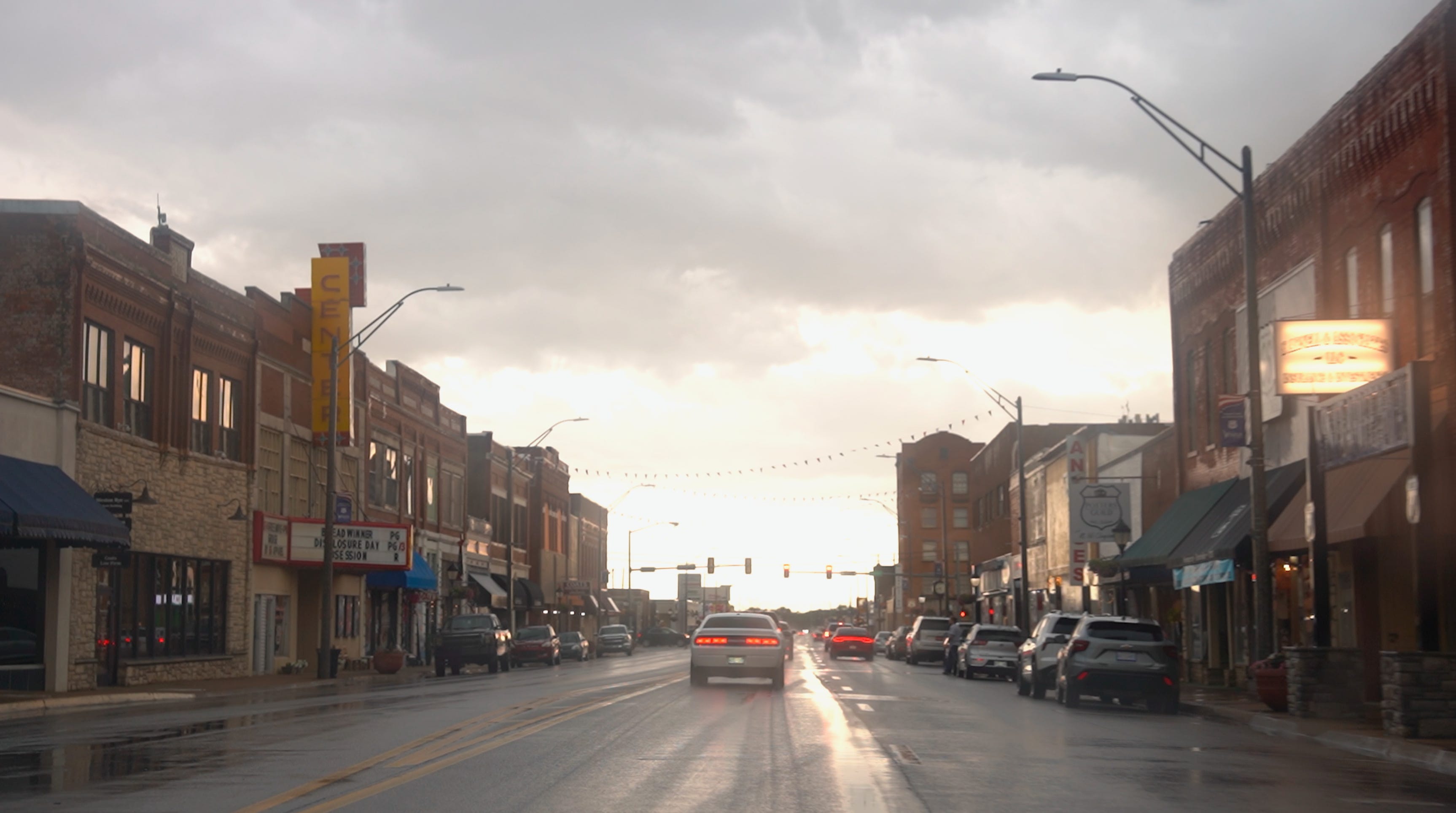
Walking down the main street, we met a man wearing suspenders and an “America 250” t-shirt standing outside an antique store. As soon as we asked to interview him, he said, “Oh my wife would love this” and led us across the road and into a storefront.
For one, we were relieved – it’d been pouring all day, and we hadn’t come across many people. Inside, the man’s wife stood behind a bar, with a sequinned shirt and a baseball hat with the American flag on it. The room was cavernous but chic. A bible study group was setting up at one of the tables for their weekly meeting.
The woman told us the backstory of the place. A bridal shop until the 1980s – “The dresses are still upstairs!” – it sat vacant until recently, when the couple bought it and transformed it into a restaurant and cafe. They’d opened only a few weeks before.
While in many Roca videos we find towns that are run-down or forgotten, Vinita was not that. It was a town coming back to life in small spurts and starts, harnessing Route 66 as its backbone but developing a fresh identity – just like the bridal storefront – as it went along.
If you follow Roca, you’ll know that I joined only a little more than a month ago. It’s experiences like this day driving alongside Route 66 during its 100th year that make me excited to be part of this team and to continue to bring you what we find out there in America – the good, the bad, the ugly, and whatever else seems interesting. There’ll always be something magical about hitting the road with no hard agenda, eyes and ears wide open, ready to take in and share what we find.
And the stories from the road? They’re always worth telling.
Enjoying the article so far? Consider upgrading your subscription to become a paid member. It’s members like you who fund Roca’s journalism and enable us to write these on-the-ground reports from places like Vinita. Thanks for riding the wave!
By Max Frost
Last year, I found myself on Route 66 in Albuquerque, New Mexico, 650 miles west of Vinita, Oklahoma. It’s reassuring to hear that Vinita is doing well, because Albuquerque’s section of Route 66 was not. In fact, it’s now the city’s most crime-ridden neighborhood, known by the unfortunate nickname of the “War Zone.”
From 1926 through the 1950s, Route 66 was the main artery connecting Chicago to Los Angeles. It ran directly through town centers with stoplights, sharp turns, and low speed limits. It was at once the fastest way to cross America and the scenic route. What a time!
But in 1956, President Eisenhower signed the Federal-Aid Highway Act, which specifically replaced Route 66’s function with highways like I-55, I-44, I-40, and I-15. Engineers routed these highways around towns rather than through them to keep speeds high. Suddenly, a town that used to have every westbound traveler drive past its motels and diners might be five or ten miles from the interstate and destined to become a shell of its former self.
In Albuquerque, Route 66 is now “Central,” the city’s most notorious road. During the day, people are hunched over from taking fentanyl; ambulances cycle in and out to treat overdoses. If you stick around long enough, you’ll hear gunshots.
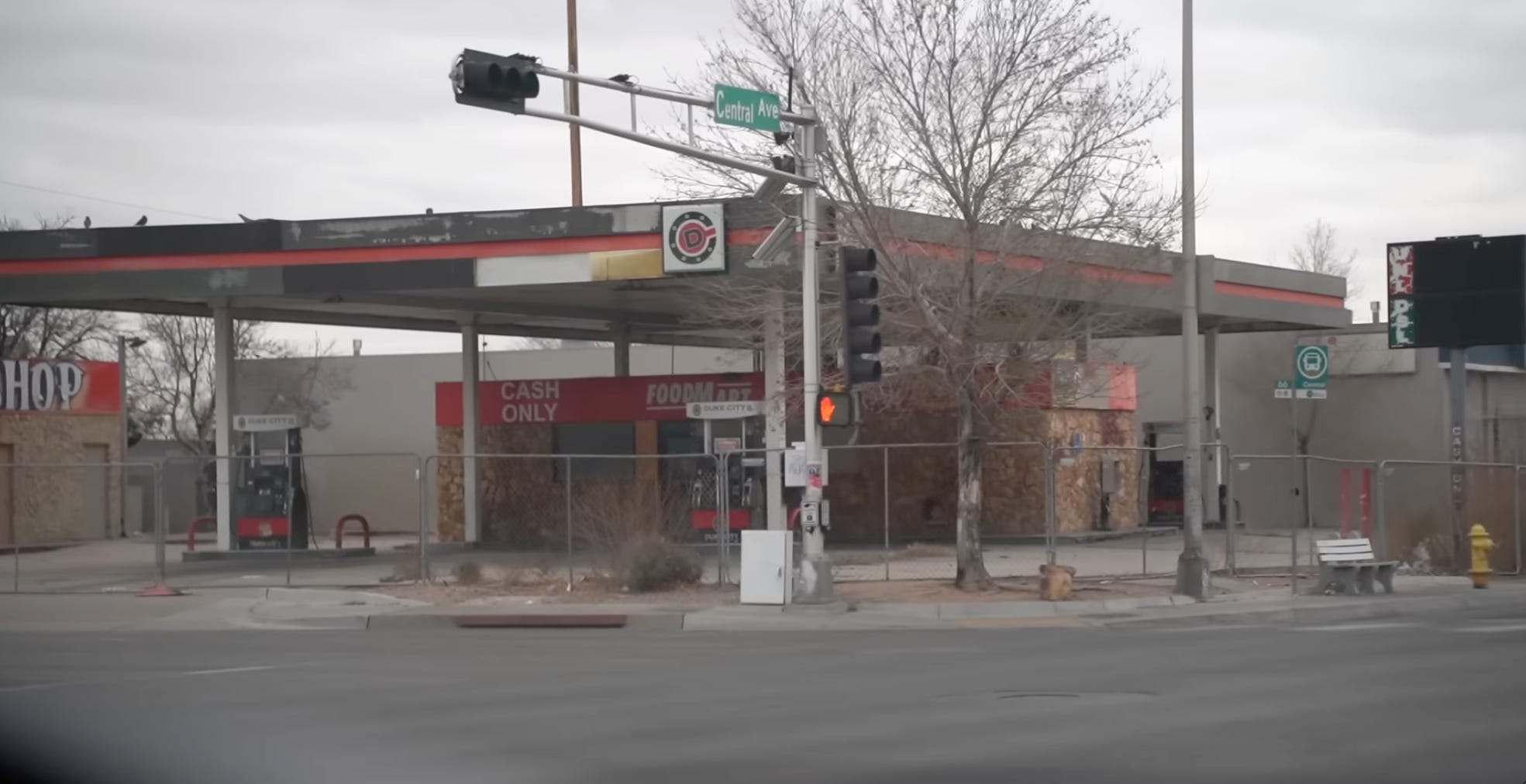
At night, people light fires on the roadside to stay warm. The motels that once housed California-bound tourists are rented by the hour for the purpose of liaising with a prostitute or consuming drugs. When I visited in January 2025, residents expressed disbelief that the neighborhood had been allowed to deteriorate as it did.
Albuquerque’s government is trying to rebrand the War Zone into the International District, yet as of my reporting, that was a pipe dream.
“It’s like we don’t have a voice,” one woman told me outside her home in the area. “It’s not that we don’t have compassion, but it’s like we can’t even walk with our kids because they’re just drugging themselves. They have so much trash. They blocked the road. Some of these people are even having sex! You can actually walk and sometimes you are able to see.”
“Sometimes I feel that because we’re low-income, it’s like they push everything over here,” she added.
Across the street, a young man – who worked for the city – gestured to the house next door, where people appeared to be buying drugs.
“As you can see, you have people coming in and out. You rarely see who they are because there’s always someone new. And we have drive-bys. One of our vehicles got shot, so we had to trade it in.”
He’d bought a house in the area to be next to his mom, but they’d had enough of Route 66: “We’re trying to get out of this neighborhood,” he told me.
Dramatic, rapid change can create winners and losers, and the bypassing of Route 66 created a lot of both. Yet in Albuquerque, it seems that for decades, the neighborhood has been left to crumble, while in Vinita, people brought it back. If there’s one takeaway, perhaps it’s this: Even when change befalls a community, the story is far from over.
Editor’s Note
Thanks for reading. We hope you enjoyed this piece. If you’ve got stories about Route 66, send them here or let us know in the comments below.
And, as always, you can find our past five articles here:
See you tomorrow.
—Max and Max
You should have stopped in Springfield, Missouri the birthplace of Route 66. Many festivities have been going on for the centennial! We live just south of there on Table Rock Lake.
You mentioned Grapes of Wrath. Steinbeck also wrote Travels With Charlie, which I believe is a bit more contemporary and has a more sociological bent to it.